Meet Our Director
Neelkanth Mishra – A visionary educator leading the revolution of computer education in rural Chandauli.
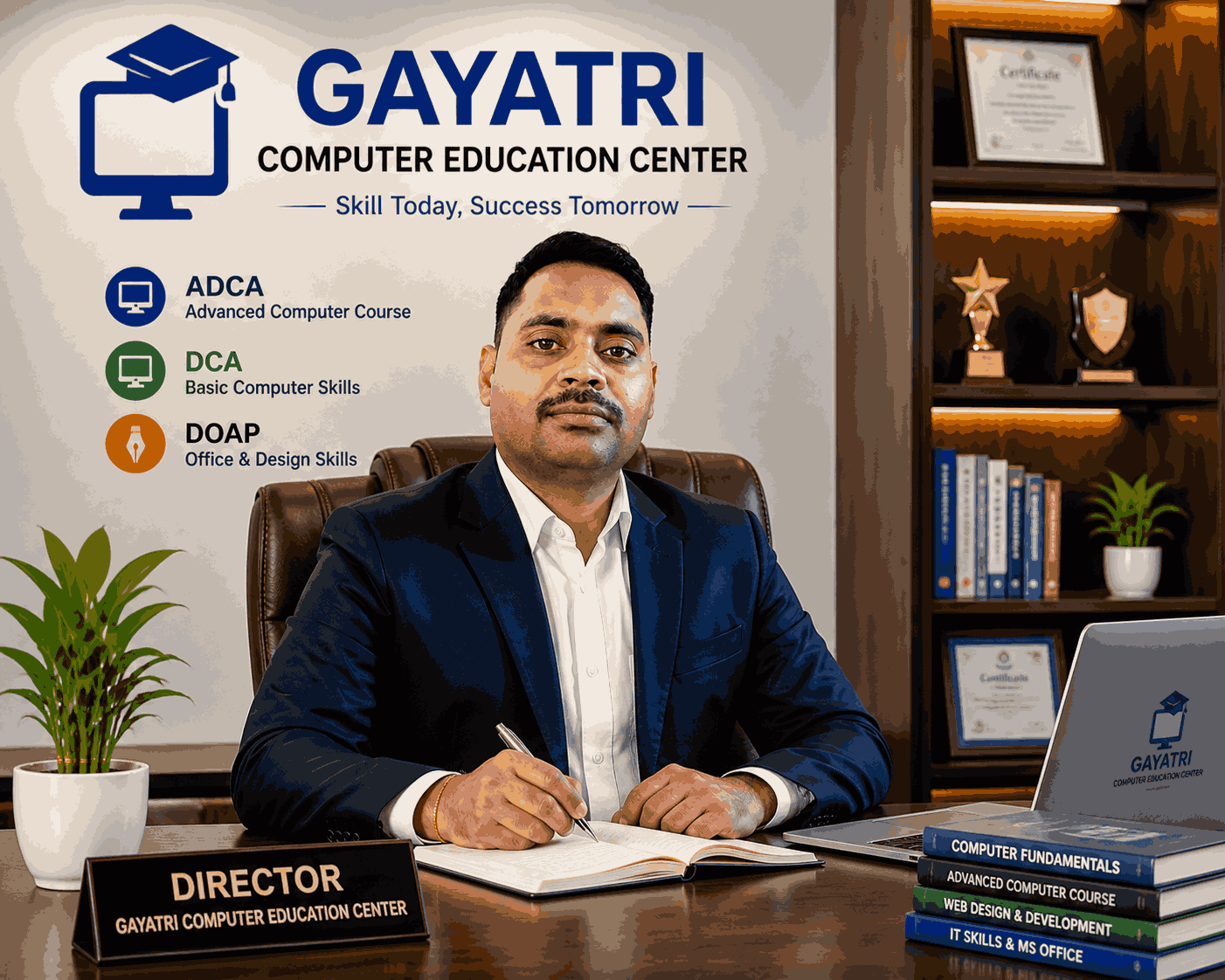
Neelkanth Mishra
Director, Gayatri Computer Education Center
The Visionary Journey of Neelkanth Mishra: Empowering Rural India Through Digital Literacy
Chapter 1: Introduction – The Dawn of a Digital Revolution in Chandauli
In the heart of Chandauli district, a region historically known for its agricultural roots and immense untapped human potential, a quiet but profound transformation is taking place. Where aspirations once faced the formidable barriers of limited resources and a lack of modern infrastructure, a new chapter of empowerment is being written. At the center of this digital renaissance stands a visionary educator, a relentless advocate for youth empowerment, and a pioneer of modern pedagogy: Neelkanth Mishra. As the Director of Gayatri Computer Education Center (GCEC), he has not merely established an educational institute; he has forged a vital pathway connecting the raw talent of rural India with the boundless opportunities of the global digital economy.
Neelkanth Mishra is a name synonymous with educational excellence, unwavering dedication, and transformative leadership. His journey is not just a personal success story but a blueprint for social change through education. Armed with a profound understanding of technology and a deep empathy for the struggles of students from marginalized communities, he set out on a mission to democratize computer education. His belief is simple yet revolutionary: that access to quality technical training should not be a privilege reserved for metropolitan cities, but a fundamental right for every eager mind, regardless of their geographical location or economic background.
With a formidable academic foundation that includes a Bachelor of Computer Applications (BCA), a Post Graduate Diploma in Management (PGDM), a Bachelor of Education (B.Ed), a Master of Education (M.Ed), and currently pursuing a Doctorate of Philosophy (PhD), Neelkanth Mishra embodies the perfect synthesis of technical acumen and advanced pedagogical expertise. This rare combination allows him to not only understand the complex, rapidly evolving landscape of Information Technology but also to translate these complexities into accessible, engaging, and highly effective curriculum models for his students. Under his stewardship, GCEC has evolved from a modest training center into a beacon of hope, equipping thousands of students with the skills necessary to not just survive, but thrive in the 21st-century workforce.
Chapter 2: The Academic Crucible – Forging a Leader in EdTech
The formidable impact that Neelkanth Mishra has made in the field of education is firmly rooted in his own relentless pursuit of academic excellence. His educational journey is characterized by a deliberate and strategic acquisition of knowledge spanning both technology and educational methodology. This journey commenced with his enrollment in the Bachelor of Computer Applications (BCA) program. During this foundational phase, he plunged into the intricate world of computer science, mastering programming languages, database management systems, software engineering principles, and network architecture. For Neelkanth, the BCA was not merely an academic degree; it was an intellectual awakening. It ignited a passionate curiosity about how logic, algorithms, and computational thinking could be harnessed to solve complex real-world problems and streamline human endeavors.
However, as he began to envision the broader application of technology in society, he recognized that technical proficiency alone was insufficient to drive large-scale, sustainable change. To construct institutions that could withstand the test of time and effectively serve the community, he needed organizational leadership skills. This realization propelled him to pursue a Post Graduate Diploma in Management (PGDM). This rigorous program provided him with crucial insights into strategic management, organizational behavior, financial planning, and human resource development. It transformed him from a skilled technocrat into a strategic leader capable of conceptualizing, structuring, and managing complex educational enterprises.
Yet, the core of Neelkanth Mishra’s identity remained that of a teacher. He observed that many technically brilliant individuals struggled to effectively transmit their knowledge to others. To bridge this critical gap, he turned his focus towards the science and art of teaching itself, undertaking a Bachelor of Education (B.Ed) and subsequently a Master of Education (M.Ed). This dual immersion into formal pedagogy was a turning point. He studied cognitive psychology, learning theories, curriculum design, and educational evaluation methodologies. He learned how to decode the diverse ways in which students absorb and process information, allowing him to design instructional strategies tailored to different learning styles. This convergence of IT expertise and advanced pedagogical training is the cornerstone of GCEC’s unique educational model.
Today, his thirst for knowledge remains unquenched. As a PhD scholar (Appearing), Neelkanth Mishra is actively engaged in advanced educational research. His doctoral studies focus on exploring the intersections of digital platforms, rural education, and cognitive skill acquisition. By investigating the frontiers of educational technology, he ensures that the strategies employed at GCEC are grounded in the latest empirical research and global best practices, ensuring his students are always ahead of the curve.
Chapter 3: The Genesis of GCEC – A Response to the Digital Divide
The year 2020 marked a critical juncture in global history. As the world navigated unprecedented challenges and the rapid acceleration of digital adoption, a stark reality became glaringly apparent in rural and semi-urban India: the profound severity of the "digital divide." While urban centers seamlessly transitioned to online working and learning, communities in districts like Chandauli found themselves dangerously marginalized. High-quality computer education, essential for participation in the new economy, was either prohibitively expensive or geographically inaccessible for the vast majority of the local youth. Neelkanth Mishra witnessed firsthand the frustration of talented, ambitious students who, despite possessing brilliant minds and an intense desire to learn, were systematically excluded from the digital revolution simply because they lacked access to a computer lab or a structured IT curriculum.
This observation was not merely a source of concern for Neelkanth; it was a powerful catalyst for action. He realized that leaving the technological empowerment of rural youth to chance was a profound disservice to the nation’s future. In response to this urgent, unmet need, the Gayatri Computer Education Center (GCEC) was born. Named "Gayatri" to invoke a sense of profound reverence for wisdom, enlightenment, and the illuminating power of knowledge, the institute began with a clear, localized, and uncompromising mission: to dismantle the barriers to technological education in Eastern Uttar Pradesh.
The early days of GCEC were defined by immense challenges. Establishing a state-of-the-art computer facility in an area with limited infrastructure required sheer willpower, personal sacrifice, and an unshakeable belief in the project's necessity. Neelkanth Mishra started with a small, highly focused initiative. His vision, however, was expansively ambitious. He was determined not just to run a business, but to trigger a socioeconomic transformation. He recognized that traditional 'certificate mills,' which handed out pieces of paper without imparting genuine, employable skills, were doing more harm than good. He set out to build an institution focused on rigorous, practical, and highly relevant skill acquisition—an institute where students wouldn't just learn about computers, but would learn how to build careers, create software, and solve problems using technology.
Chapter 4: The Pedagogical Philosophy – "Learn, Practice, Implement"
What distinguishes GCEC from thousands of other training centers across the country is the profound pedagogical philosophy embedded in its DNA by Director Neelkanth Mishra. Drawing upon his M.Ed background and years of observational research, he formulated the "Learn, Practice, Implement" (LPI) methodology. He frequently articulates his philosophy through a powerful analogy: "Reading about writing code is akin to reading a book about swimming—you can study the theory of buoyancy indefinitely, but you will never truly learn until you dive into the deep end of the pool."
The implementation of the LPI methodology at GCEC is meticulous and uncompromising. The "Learn" phase involves high-quality, interactive theoretical instruction where complex concepts are broken down into digestible, relatable modules. The "Practice" phase follows immediately. GCEC boasts state-of-the-art computer laboratories where every student has dedicated access to modern systems. Under the vigilant guidance of expert instructors, students engage in intensive, hands-on coding, design, or data entry exercises, translating abstract theory into concrete action.
The culmination of this approach is the "Implement" phase, which Neelkanth considers the most critical. Students are required to work on real-world projects, simulations, and case studies. Whether they are building responsive websites, developing basic software applications, structuring complex databases, or mastering advanced accounting software, they are trained to operate exactly as they would in a professional corporate environment. They learn how to debug code, troubleshoot hardware issues, face tight deadlines, and work collaboratively in teams. This rigorous, immersive environment ensures that upon graduation, GCEC students are not merely familiar with technology; they are demonstrably proficient and immediately deployable in the workforce.
"Knowledge that cannot be applied is merely inert data. Education must be a catalyst for transformation. At GCEC, we do not merely teach software commands; we cultivate computational thinking. We teach our students problem-solving and critical analysis through the very specific, exacting lens of modern technology. Our goal is to transform passive consumers of technology into active creators and architects of the digital future."
Chapter 5: Empowering the Community – Building the Digital India Dream
Under Neelkanth Mishra’s dynamic leadership, the impact of GCEC has radiated far beyond the confines of its classrooms. The institute has firmly positioned itself as a critical engine of socioeconomic development across Chandauli, Varanasi, Ghazipur, and surrounding districts. Neelkanth is a fierce advocate of the "Digital India" initiative, firmly believing that if the nation is to realize its ambition of becoming a global digital superpower, the foundational work must occur at the grassroots level. A top-down approach, he argues, will inevitably leave rural populations behind.
To operationalize this vision, he has personally spearheaded the design and implementation of highly specialized curricula tailored for diverse career aspirations. From foundational courses like the Certificate in Computer Concepts (CCC) and the Diploma in Computer Applications (DCA), to advanced professional programs such as the Advance Diploma in Computer Applications (ADCA), Web Development, and Programming in Python and Java, GCEC offers a comprehensive educational spectrum. Crucially, Neelkanth has ensured that these courses are fundamentally aligned with current industry standards while remaining linguistically and conceptually accessible to students originating from rural Hindi-medium backgrounds. This delicate balance of high technical rigor and vernacular accessibility is a hallmark of his inclusive educational strategy.
Neelkanth’s definition of empowerment extends far beyond technical proficiency. He recognizes the critical importance of holistic development. Therefore, GCEC integrally incorporates modules on professional communication, soft skills, resume building, and interview preparation. He frequently organizes specialized workshops aimed at opening new horizons for his students, such as seminars on freelance web development, remote data entry opportunities, and digital marketing. By doing so, he is not just preparing them for traditional employment but also cultivating a spirit of digital entrepreneurship. He is teaching them how to leverage the internet to create their own economic opportunities, circumventing local geographic limitations.
Chapter 6: A Legacy of Success – Transforming Statistics into Stories
The ultimate metric of an educational institution’s success is the trajectory of its alumni, and by this standard, GCEC's achievements under Neelkanth Mishra are nothing short of phenomenal. The defining statistic of the institute is its remarkable, consistent placement rate. With over 95% of its graduates successfully securing employment or advancing immediately to higher education, GCEC has proven the efficacy of its model.
However, Neelkanth constantly reminds his faculty that these are not merely statistics; they are human lives transformed. There is the story of the young woman from a remote village who, despite immense social pressure, mastered tally accounting at GCEC and is now the financial backbone of a thriving local enterprise. There is the narrative of the farmer's son who learned web development in the GCEC labs and securely gained employment at a growing IT firm in Varanasi, completely altering his family’s economic trajectory.
These success stories are not accidental. They are the direct result of Neelkanth’s tireless, relentless efforts in building bridges between the institute and the corporate world. He has established robust partnerships with over 50 IT companies, local businesses, and government agencies, creating a reliable pipeline for internships and full-time placements. His dedicated placement cell works tirelessly, not just to find jobs for students, but to match the right talent with the right opportunity, ensuring long-term career satisfaction and growth.
Chapter 7: Vision 2030 – Charting the Future of Innovation
A true visionary never rests on past accomplishments. Looking forward, Director Neelkanth Mishra is deeply engaged in the meticulous planning and execution of "GCEC Vision 2030." This ambitious, multi-phase strategic plan is designed to elevate the institution from a premier training center into a comprehensive hub of technological innovation and incubation for the entire Eastern UP region.
Central to this vision is the establishment of the "GCEC Innovation and Incubation Cell." Neelkanth recognizes that the next great technological solutions for rural India will come from the individuals who intimately understand its problems. This cell will provide aspiring student-entrepreneurs with the mentorship, seed resources, and technological infrastructure required to develop their own software startups and digital enterprises right out of Chandauli. He envisions a future where GCEC alumni are not just seeking employment, but actively creating it.
Furthermore, drawing extensively from his ongoing PhD research, Neelkanth is pioneering the integration of advanced mobile learning technologies and artificial intelligence into the GCEC curriculum. He is actively developing frameworks to extend the reach of GCEC’s educational modules deep into the most inaccessible villages via smartphone-based micro-learning platforms. He fundamentally refuses to accept that geographic isolation should equate to digital isolation. His ultimate vision is a seamlessly connected, digitally literate region where every individual possesses the tools to participate actively in the global digital economy.
A Personal Message from the Director
"To my dear prospective students, respected parents, and the broader community of Chandauli,
We are living in an era defined by unprecedented, accelerating change. The landscape of the global economy is being fundamentally redrawn by forces such as Artificial Intelligence, Data Science, Cloud Computing, and hyper-connectivity. In this rapidly emerging new world, computer literacy is no longer an optional 'extra' skill or a luxury; it has become the fundamental survival skill of the 21st century. It is the new alphabet.
For too long, students from our region have been told that high-level technological success is meant for others, for those in the big cities. I fundamentally reject this notion. Intelligence, creativity, and the capacity for hard work are distributed equally, regardless of geography. What has been unequal is the distribution of high-quality opportunity.
I invite you to step through the doors of Gayatri Computer Education Center. Here, we do not merely teach you how to use a keyboard or operate a software program; we prepare you to lead, to innovate, and to commandeer the technology that shapes our world. We provide you with the exact same rigor, infrastructure, and training that you would expect from elite urban institutions, right here in your home district.
Always remember: Your background, your current economic circumstances, and your geographic location do not define the limits of your future. Your skills, your determination, and your education do. Give us your dedication, and we will give you the digital universe. Let us build that transformative future together."
- Neelkanth MishraDirector, GCEC
Academic & Professional Timeline
Technical Mastery
BCA (Bachelor of Computer Applications). Foundation in programming, systems, and software engineering.
Leadership Edge
PGDM (Post Graduate Diploma in Management). Advanced training in strategy, leadership, and institutional growth.
Pedagogical Expert
B.Ed & M.Ed. Expertise in teaching methodologies, curriculum design, and educational psychology.